

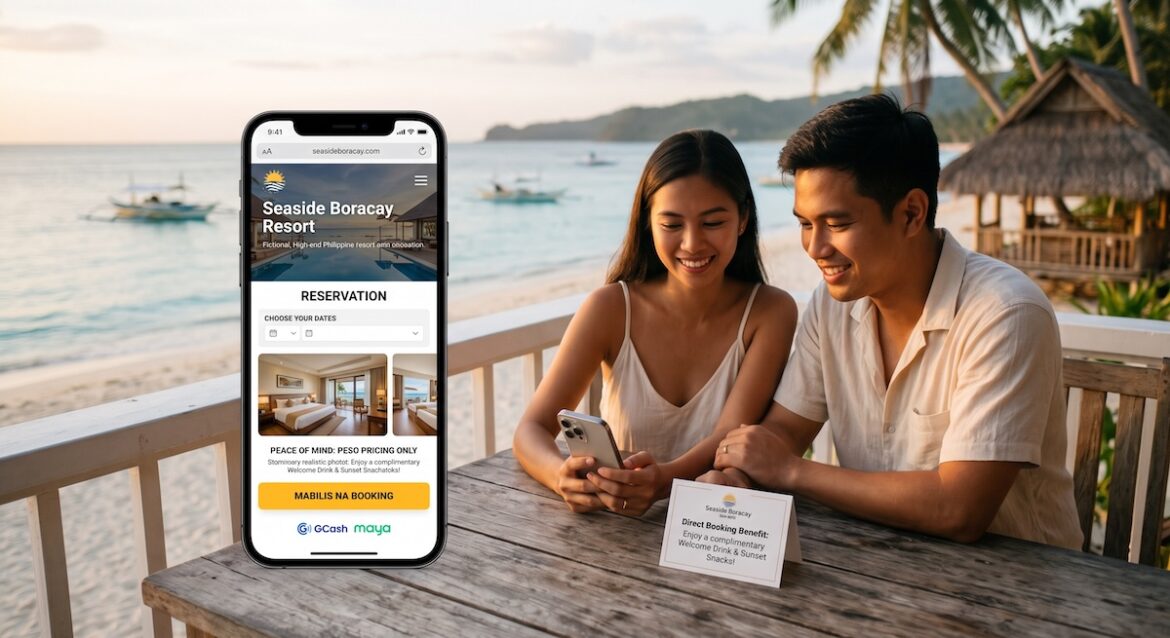
Picture this: It’s the start of summer and your beachfront resort in Boracay, Palawan, or Cebu is finally getting inquiries. Most of them come from Agoda, Booking.com, or Expedia. Your rooms are filling up, which is great, but at the end of the month you realize a huge chunk of your revenue went straight to commissions. Sound familiar?
If you run a hotel, pension house, or resort in the Philippines, you know OTAs can bring visibility. But relying on them alone is like renting your business instead of owning it. A dedicated hotel website Philippines owners can control is no longer a nice-to-have, it is the key to more profit, stronger branding, and lasting guest relationships. Let us break down why you need a direct booking website, not just OTA listings.
OTAs Are Helpful, But They Come at a High Price
Online Travel Agencies definitely have their place. They help tourists from Manila, Korea, Europe, and the US discover your property when they search for places to stay. For new hotels with no online presence yet, that exposure is valuable. The problem is what happens after the guest finds you.
When every booking comes through a third-party platform, you pay for it over and over again. Here is what many hotel owners do not realize until it hurts their cash flow:
- High OTA commission fees: Most OTAs charge 15 percent to 25 percent per booking in the Philippines. On a 5,000 peso per night room, that is up to 1,250 pesos gone before you even welcome the guest.
- No control over pricing and promotions: OTAs often require rate parity, which means you cannot offer a cheaper price on your own channels without risking penalties.
- You compete side-by-side with rivals: On an OTA results page, your beautiful boutique hotel in Siargao appears right next to ten other properties. Guests choose by price, not by experience.
- You do not own the guest relationship: The OTA owns the email address, the booking history, and the communication. You cannot easily follow up, invite them back, or ask for a review.
In short, OTAs rent you customers. A direct booking website helps you keep them.
Why Direct Bookings Are Better for Your Bottom Line
Direct bookings are reservations that come straight through your own website, Facebook page, phone, or email, with no middleman taking a cut. Even shifting just 20 to 30 percent of your OTA reservations to direct can add hundreds of thousands of pesos back to your profit every year.
But it is not just about saving on OTA commission. It is about building a sustainable business:
- Keep 100 percent of your revenue: No commission means better margins you can reinvest in staff, renovations, or better amenities for guests.
- Build your own brand, not someone else’s: Your website tells your story with your photos, your videos, your reviews, and your Filipino hospitality. Guests book because they love you, not because you were the cheapest option on page two.
- Own your guest data: With direct bookings, you collect names, emails, and preferences. You can send birthday promos, holiday packages, and balikbayan deals that bring repeat guests back every year.
- Offer perks you cannot offer on OTAs: Free breakfast, early check-in, airport pickup from Mactan or El Nido, or a free upgrade. These small extras encourage travelers to book direct next time.
- Reduce cancellations and no-shows: Guests who book directly on your site tend to be more committed and easier to communicate with via email, SMS, or Messenger.
Filipino travelers especially love to message, ask questions, and confirm details before paying. When your website makes it easy to check availability, see real prices in pesos, and book in just a few clicks, you remove friction and win the reservation.
What Makes a High-Converting Hotel Website in the Philippines?
Having just any website is not enough. To turn lookers into bookers, your hotel website Philippines travelers find on Google needs to be fast, mobile-friendly, and trustworthy. Remember, most of your guests will check you out on their phone while commuting or browsing at night.
Here is what a practical, booking-ready hotel website should include:
- Mobile-first design with fast loading: Your site should load in under three seconds even on mobile data in the province. Slow sites lose bookings fast.
- Integrated booking engine and clear pricing: Show live availability, room types, peso pricing, and seasonal promos. Add a prominent Book Now button on every page.
- Local payment options: Connect GCash, Maya, bank transfer, and credit card payments so both local and foreign guests can pay with confidence.
- Real photos, virtual tours, and reviews: Showcase your pool, rooms, restaurant, and nearby attractions like beaches, waterfalls, or city views. Add Google reviews and testimonials for social proof.
- Google-friendly SEO and Maps integration: Optimize for searches like hotel in Bohol or resort in Coron, plus connect Google Maps, contact forms, and click-to-call buttons.
You do not need anything overly complicated. You just need a clean, professional site that answers the guest’s main questions: Where is it, how much is it, is it available, and how do I book now?
OTAs will always be part of the travel journey, but they should not be your entire strategy. With your own direct booking website, you save on OTA commission, grow direct bookings, strengthen your brand, and build real relationships with guests who will return again and again.
Ready to take control of your reservations? Contact Remote IT Solutions today for expert web development for hotels and resorts in the Philippines. We will help you build a fast, beautiful, and booking-ready website that turns visitors into loyal guests.